
When Football Takes a Backseat: How Super Bowl Performances Become Strategic Statements
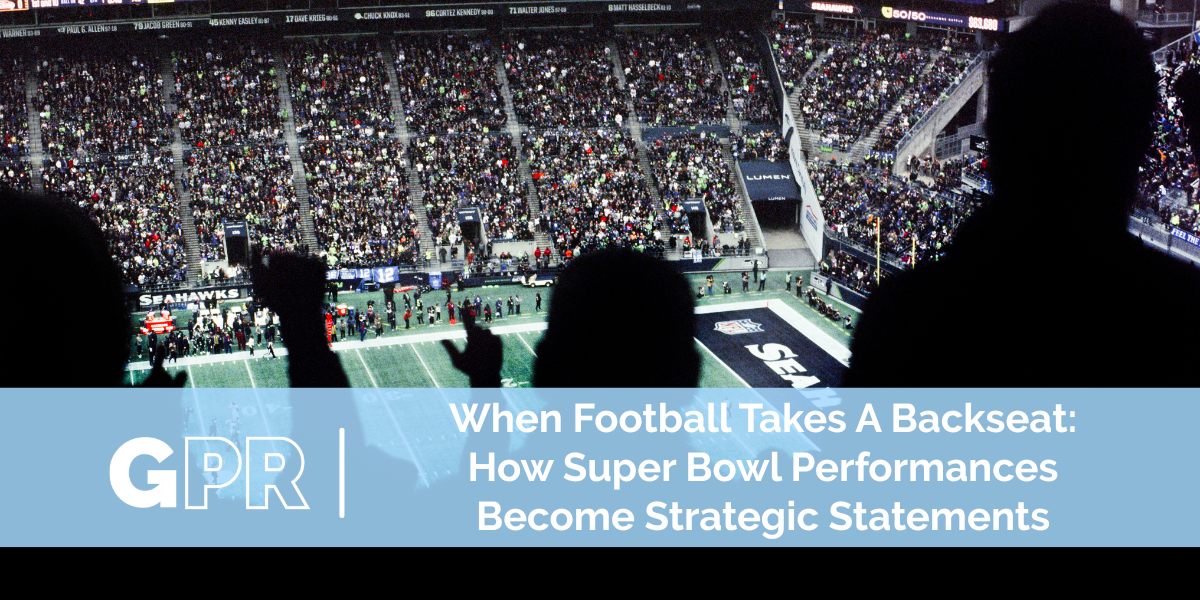
Super Bowl LX, More Like Benito Bowl
Earlier this month, the 59th annual NFL Super Bowl was held in Santa Clara, California. Last Sunday, the league announced that Latin artist Bad Bunny would headline the halftime show, and social media was instantly flooded with mixed reactions nationwide. Since the announcement, Bad Bunny has won a Grammy for Album of the Year, kicked off his “Debí Tirar Más Fotos” world tour, been named Spotify’s most globally streamed artist in 2025, and continues to leave a massive cultural impact with every media move he makes. With so much momentum behind him, it’s no wonder that by the time Sunday, February 8th rolled around, social media users were referring to the 2026 Super Bowl as the “Benito Bowl”.
Bad Bunny's Super Bowl set was a performance full of love, celebration, and unity. Within the 12-minute duration, he performed more than 10 songs from various albums, with many notable gestures that not only honored Puerto Rican history and culture but also the broader Latino community. The Super Bowl is a cultural staple in the U.S., and this performance was set to be the first-ever halftime show almost entirely in Spanish, amplifying social media’s reaction to the NFL’s initial announcement.
Rather than conforming to suit an Americanized stage and audience, Bad Bunny successfully shifted the audience's focus away from polarizing differences and toward cultural representations. Bad Bunny turned his halftime performance into a strategic message, one that asserted pride, cultural visibility, and global influence before one of the world's largest audiences. The live performance had approximately 128.2 million viewers, making it one of the most-watched of our time and showing just how widespread the messages from the NFL's halftime show truly are.
Everyone Loves Halftime
The Super Bowl halftime performance is one of the most memorable annual moments in modern pop culture. Artists take their stage presence a step further, creating performances that leave a lasting impression on viewers. These performances are unpaid to the artists, making this a unique opportunity to emphasize a performer’s cultural impact and character.
Artists such as Beyoncé and Kendrick Lamar deliver notable performances with heavy messaging throughout their sets. Beyonce, who performed in 2013, took a moment to honor the Black Lives Matter movement, addressing the controversy surrounding her single “Formation,” which was regarded as “one of the most political music videos in recent memory.” Kendrick Lamar's performance in 2025, which held heavy undertones about the inequality still present across many American institutions and the growing political tension shaping the country’s cultural climate. Both performances received strong public reaction and were pivotal moments in the artists’ careers.
More Than Music
These moments further illustrate how the Super Bowl halftime show has evolved beyond an artist’s musicality and set list. This stage is now a platform for artists to shape existing conversations and ignite discussion for those who do not have the same influence or impact. The Super Bowl halftime shows are among the most-watched musical performances each year, averaging 124.9 million viewers across all platforms, offering artists the opportunity to perform to the masses.
Throughout his performance, Bad Bunny made it clear that the Super Bowl stage does not require compromise to resonate with American audiences. He centered Puerto Rican culture with numerous references to historical moments and performed solely in Spanish, showcasing his pride in Latino culture. He demonstrated how the stage is used to communicate messages about an artist’s identity, not just to showcase an album. In today’s media landscape, when football scores seem to fade into the background, conversations about performance prove that this is more than a public concert; it is a moment for storytelling and cultural influence.
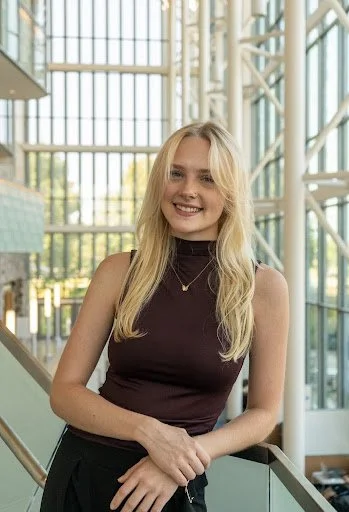
Haley Norton is a Senior at GVSU, majoring in Advertising and Public Relations. She is expected to graduate this May and is excited to continue exploring professional opportunities in the Grand Rapids area. During her final year at GVSU, she hopes to make the most of her time as an Account Executive at GrandPR, strengthening her academic foundation, personal portfolio, and professional network.