
The Evolution of Experiential Marketing
For decades, the playbook for brand awareness was predictable: create a slogan, design a visual that grabs attention, secure media placements, and broadcast the message to millions across platforms. This idea was built entirely upon passive viewing. Consumers watched TV ads, walked past billboards, and heard radio ads, quietly absorbing whatever the brand put in front of them.
Now in 2026, that passive playbook has been rewritten.
Today’s consumers don’t just tune out traditional ads; they block, skip, and flat-out ignore them. Saturated by hyper-personalized content and endless feeds, people have developed an immunity to standard push marketing. To capture attention and build brand loyalty today, companies have had to shift their strategy entirely, from passive to active.
The Power of Multi-Sensory Design
Why are multi-sensory activations proving more effective than digital campaigns alone? The answer lies in the human brain.
When a brand engages all five senses, it bypasses cognitive fatigue and creates deep-seated emotional anchors.
Smell
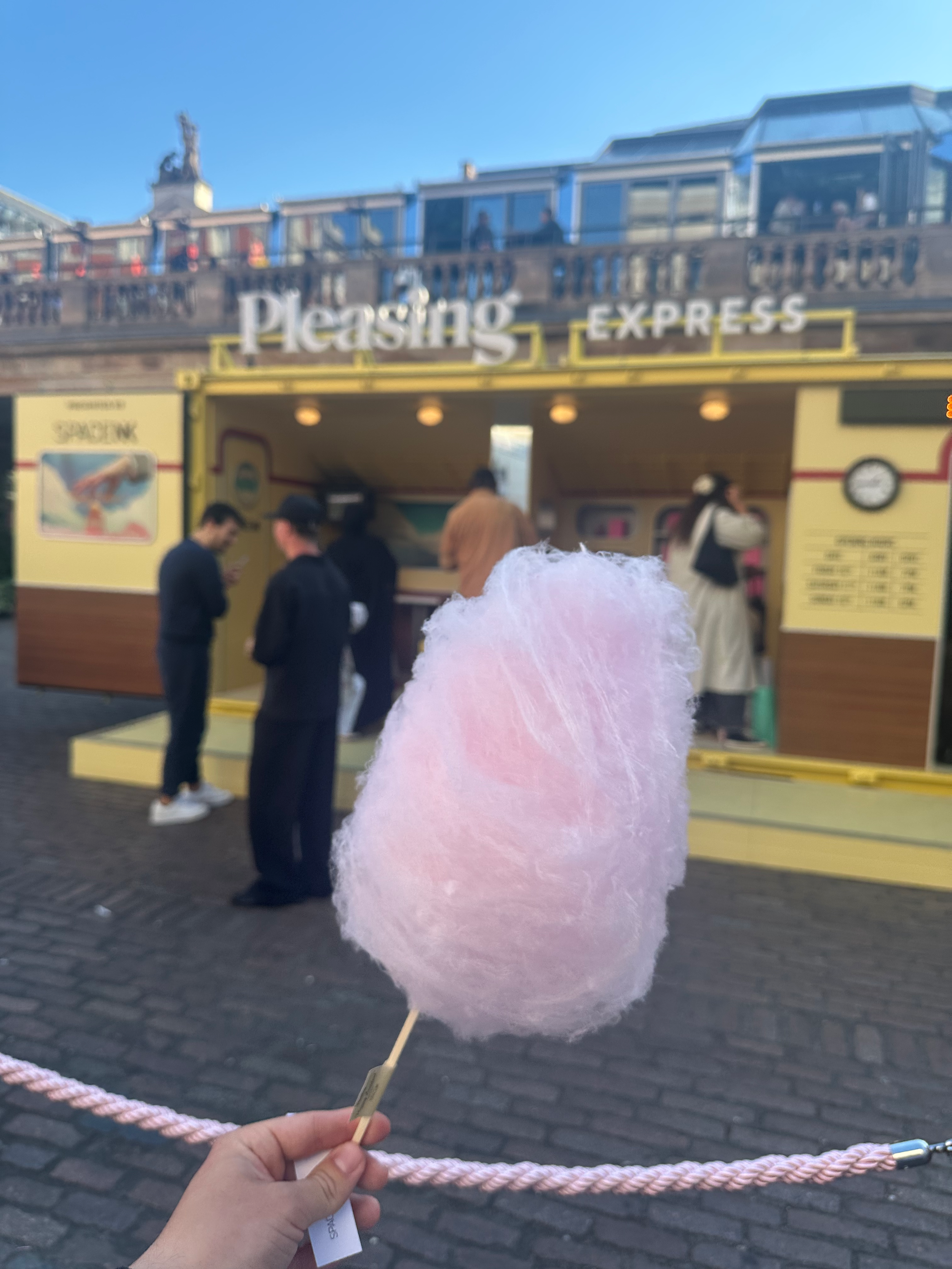
An ambient scent at a pop-up can connect a customer to a physical space, long after the event ends. Think of Harry Styles’ Pleasing brand in London 2025, which hosted a pop-up event called “The Pleasing Express.” At the event, consumers were allowed to smell the new scent, get free cotton candy, and receive free swag to remember the event. This ambient smell happens to be the exact scent the brand wants to buy; add on the additional swag and a free tasting item, and there is a full-circle brand connection to consumers.
Touch
Letting customers touch raw materials, assemble products at customization bars, or move through interactive structures helps build a sense of ownership. Coach and Spotify teamed up for their Fall 2026 campaign called “Tabby Tour,” featuring Coach’s Tabby Bag to try on, get customized hangtags, and sit in listening lounges. Coach is giving consumers an opportunity to feel the item on them, and getting a sense they own it is key to this marketing style.
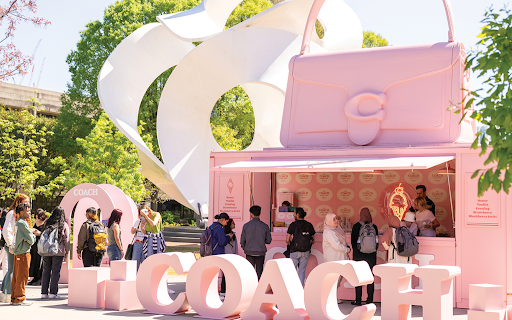
Coach x Spotify’s “Tabby Tour”
Sound
Dynamic audio environments and reactive lighting turn a basic venue into an immersive "world" where guests lose track of time and fully immerse themselves in the experience. At Tate’s Garage in December 2025, Tate McRae and Spotify teamed up to invite the Top Listeners of Tate McRae in 2025 to an event featuring an on-site Sports Car, a Tater Tot stand, free tooth gems, DIY phone charms, customized t-shirts, and additional Tate McRae merchandise. Throughout the entire event, her music is highlighted with dancer projections and themed set design.
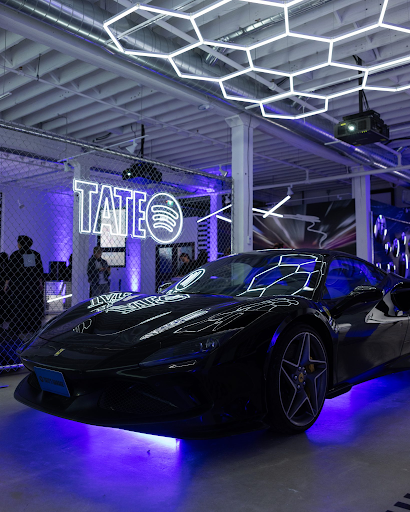
Tate McRae x Spotify Collab
When you engage with the whole human, the brand stops being an entity on a screen and becomes a physical memory.
From Photo Op to Co-Creation
In the early days of experiential marketing, activations were often reduced to simple photo ops, oftentimes a floral backdrop with a neon sign slapped on top, designed strictly for an Instagram feed.
In 2026, a step-and-repeat isn't an experience; it's a glorified digital billboard.
Today’s most successful activations give attendees agency. Brands are building spaces powered by creative technology, gamification, and hands-on workshops where the attendee’s choices actively shape the environment around them. The customer becomes the co-creator of the brand’s story.
When attendees are the ones creating the story, organic social media sharing happens naturally. They aren't broadcasting a forced marketing tag; they are sharing their own experience, making the user-generated content infinitely more authentic and persuasive to their peers.
The Return on Experience
Experiential marketing delivers a different metric altogether: Return on Experience.
Traditional advertising measures success through impressions and click-through rates. In an era where consumers tune out ads, impressions say very little about actual resonance. When a brand successfully crafts a multi-sensory moment, it earns lasting emotional resonance. It bridges the gap between digital and real-world connection, transforming passive onlookers into active, long-term brand advocates.
In 2026 and beyond, brands that rely on static ads to tell their story will continue to be scrolled past. The brands that win will be the ones that invite their audience to step inside and experience the story for themselves.
About the Author
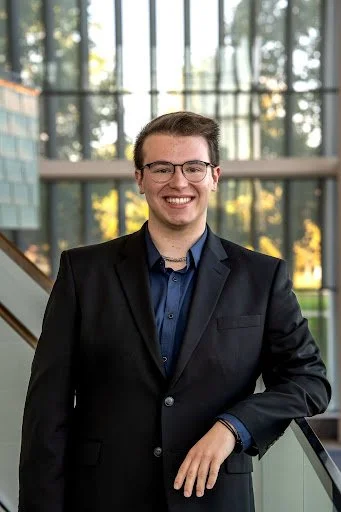
Benjamin Sanko is a senior majoring in Advertising and Public Relations, minoring in Business, and receiving the Social Media Badge at GVSU. Ben currently serves as GrandPR’s Chief Digital Officer (CDO), working alongside the GVPRSSA Social Media Director and GrandPR’s Media Coordinator. Ben also works as Momentum Dance Club’s Social Media Manager. Ben plans to pursue a career in Entertainment PR/Advertising, in touring music, or touring theater.